
11 Warm and Neutral Winter Bedroom Ideas for a Relaxing Escape
As winter settles in and the days grow shorter, the bedroom naturally transforms from a casual sleeping space into a protective sanctuary. When the weather turns cold outside, dialing back the visual clutter and focusing on a grounded, warm neutral palette creates an immediate sense of calm. Designing a winter-ready escape does not require a complete overhaul or a stark white minimalist look that feels chilly in January. Instead, it is about building depth through tactile materials, heavy organic textiles, and soothing, earthy tones that make a room feel cocooning, restorative, and deeply welcoming.
1. Layer Heavy Linen and Heavyweight Cotton Bedding

Trading lightweight percale for a heavier foundation of washed linen and heavyweight cotton creates an effortless, lived-in texture that instantly signals winter comfort. Linen breathes well while offering a substantial, relaxed drape that feels comforting against the skin.
- Mix relaxed flax-linen duvet covers in warm oatmeal or soft bone with crisp, heavyweight cotton sheets.
- Avoid overly stiff or slick synthetic fabrics that fail to hold natural body warmth.
- Allow the bedding to drape naturally over the sides of the mattress without hospital corners for a softer, more inviting aesthetic.
Editor’s Note: When mixing neutral tones like flax, stone, and cream, pay close attention to undertones. Stick to either warm yellow-based neutrals or cool grey-based neutrals to keep the bed styling cohesive rather than mismatched.
2. Anchor the Room With a Deep Wool or Jute-Blend Area Rug
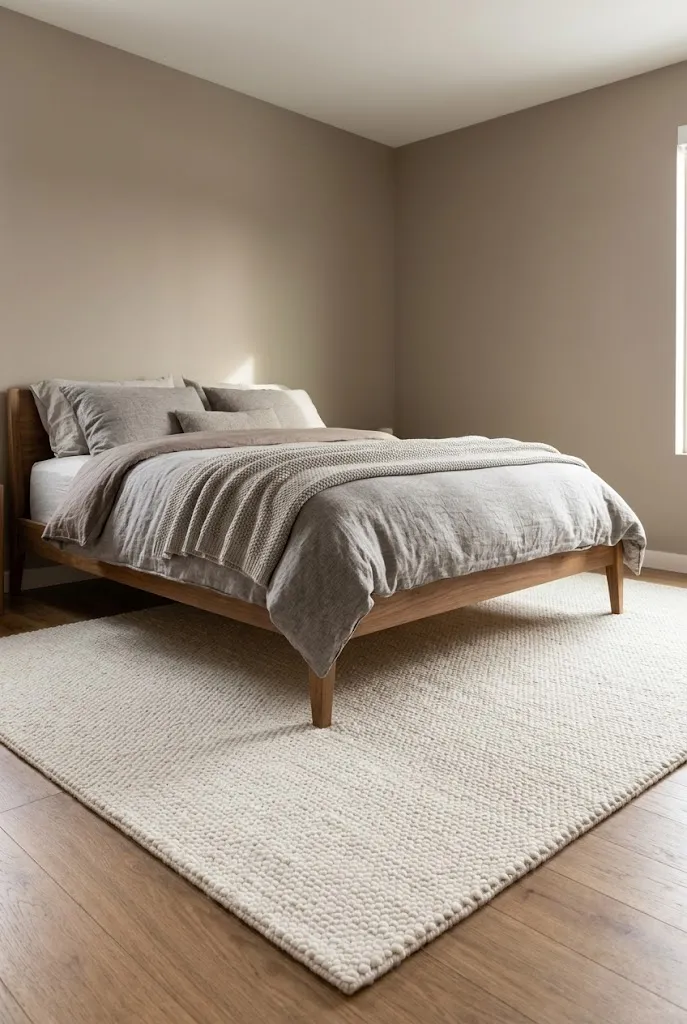
Hardwood or tiled floors look stunning in warmer months, but stepping onto a cold surface on a freezing winter morning instantly breaks the illusion of a cozy retreat. Placing a thick, textured area rug beneath or partially under the bed introduces a layer of physical warmth and absorbs sound.
- Choose rugs made from undyed wool, chunky loop knits, or wool-jute blends that offer underfoot resilience.
- Ensure the rug extends at least eighteen to twenty-four inches on the sides of the bed to maximize foot comfort upon waking.
- Stick to subtle geometric patterns or heathered, multi-tonal solids in shades of taupe, warm gray, or raw ivory.
3. Introduce an Oversized Chunky Knit Throw Blanket
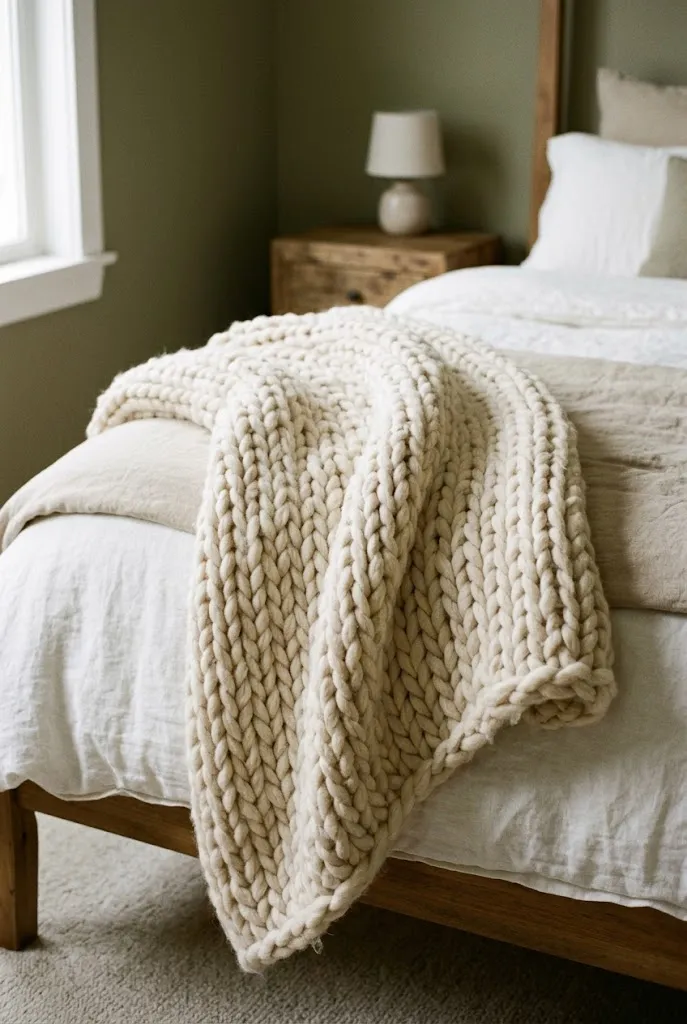
Nothing communicates winter comfort quite like oversized knitwear. Draping a heavy, hand-knitted wool blanket across the foot of the bed adds an extra layer of physical warmth while breaking up flat expanses of duvet fabric.
- Look for roving wool yarns or thick cotton cord knits in raw cream, oatmeal, or charcoal brown.
- Fold the blanket loosely or let it cascade casually across one corner of the bed for an organic styling effect.
- Use this piece as an easy seasonal swap that can be packed away when spring arrives.
4. Install Dimmable Warm-Tone Bedside Lighting
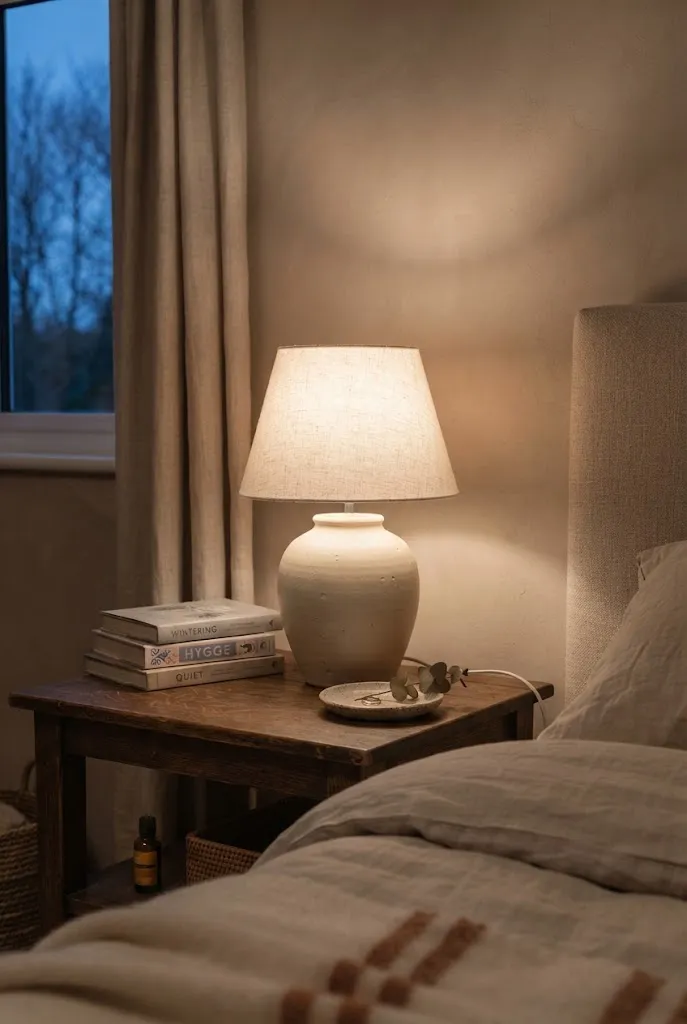
Harsh overhead lighting instantly shatters the tranquil mood of a winter bedroom. Because winter evenings arrive early, shifting to warm, layered ambient lighting helps signal to the body that it is time to unwind.
- Replace standard bulbs with warm-temperature LEDs ranging between 2200K and 2700K to mimic the soft glow of candlelight.
- Install bedside wall sconces with dimmer switches or place heavy ceramic table lamps with fabric shades on nightstands.
- Use shaded fixtures that direct light downward or diffuse it softly across the walls rather than glaring outward.
5. Incorporate Raw Edge Wooden Furniture and Accents
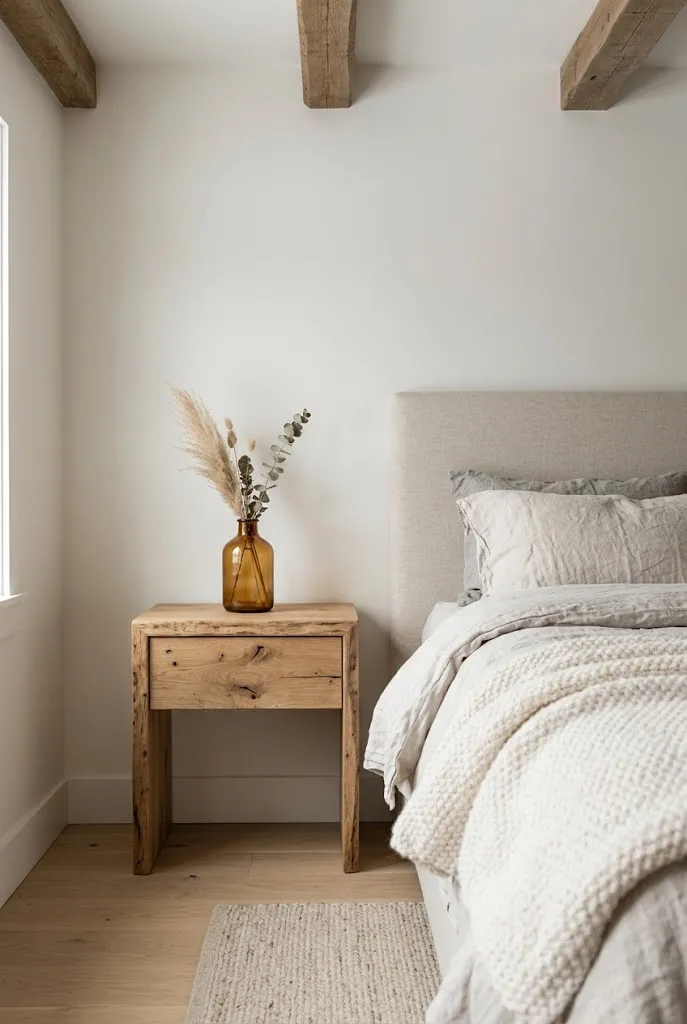
Introducing natural, unfinished or lightly sealed wood tones counteracts the chill of a neutral winter color palette. Wood brings organic warmth, history, and visual weight to the bedroom without requiring bright colors.
- Incorporate a solid white oak or walnut bedside table, a rustic bench at the foot of the bed, or exposed ceiling beams if architecture permits.
- Look for pieces that highlight natural wood grain, knots, and subtle imperfections rather than high-gloss or heavily stained finishes.
- Balance the deep tones of darker woods with lighter linen and cream textiles to maintain an airy feel.
6. Swap Standard Pillowcases for Velvet or Bouclé Textures

Standard cotton or linen pillowcases are wonderful for breathability, but winter styling benefits immensely from tactile shifts near the face and shoulders. Introducing a pair of accent pillows or Euro shams in soft velvet or heavy bouclé adds immediate richness.
- Choose muted, earthy colorways such as warm charcoal brown, muted olive green, soft taupe, or aged ivory.
- Keep the pillow arrangement simple—two standard sleeping pillows, two textured Euro shams against the headboard, and one lumbar pillow in front.
- Avoid overly shiny synthetic velvets; instead, opt for cotton-blend or heavy polyester velvets with a matte, sophisticated finish.
7. Hang Heavyweight Thermal or Linen-Blend Drapery
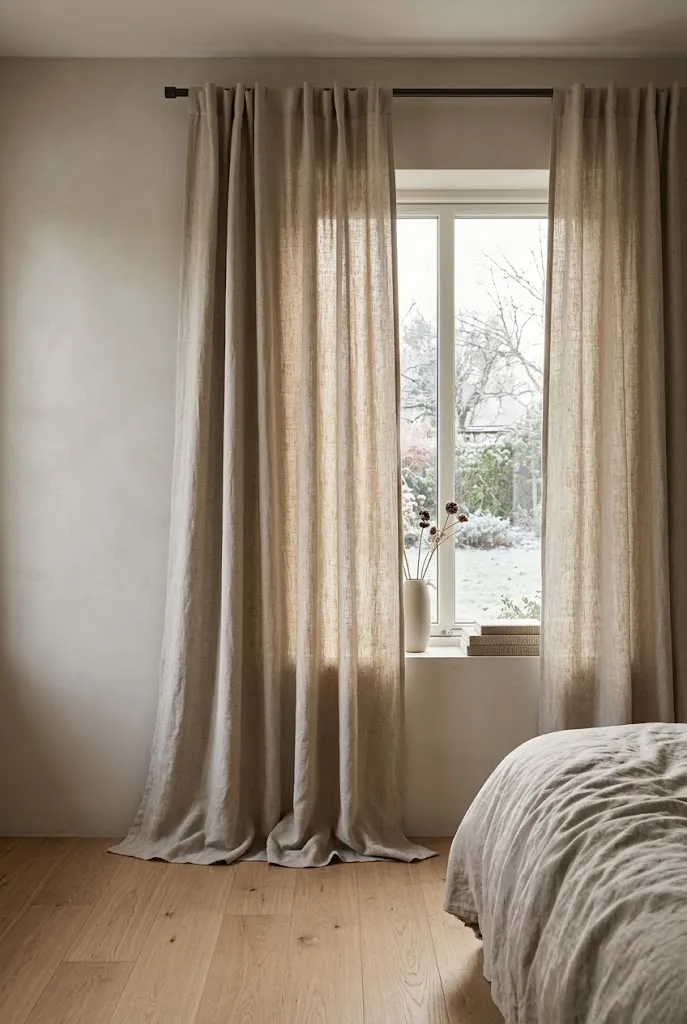
Windows are the primary source of thermal loss and visual coldness in a winter bedroom. Replacing sheer summer curtains with substantial, floor-pooling drapery instantly warms up the perimeter of the room and creates a softer acoustic environment.
- Choose heavyweight linen-blend, cotton velvet, or thermal-lined drapery panels in soft neutral shades like oatmeal, greige, or warm stone.
- Mount curtain rods several inches above the window frame and extend them past the glass to make windows appear larger and wrap the room in fabric.
- Allow the fabric hem to gently puddle slightly on the floor for a relaxed, high-end editorial look.
8. Style With Muted Earthy Tones Instead of Stark White

While all-white interiors look refreshing in summer, they can feel clinical and cold during grey winter months. Grounding the space with a palette inspired by nature—such as soft clay, warm charcoal brown, muted olive green, and rich taupe—creates a deeply restorative atmosphere.
- Paint accent walls or layer decor elements in grounding, desaturated earth tones that absorb light rather than reflecting a sterile glare.
- Use charcoal brown or muted olive green for smaller accent pieces like ceramic vessels, trays, or art frames.
- Keep ceilings and trim in a soft, warm-tinted white to maintain vertical lift while warming up the overall envelope of the room.
9. Add Subtle Organic Elements and Dried Botanicals

Fresh flowers are scarce in winter, but bringing organic elements indoors connects the bedroom to nature during its dormant season. Dried botanicals, sculptural branches, or potted evergreens introduce organic shapes that soften rigid architectural corners.
- Style a heavy ceramic or stoneware vase with dried eucalyptus, pampas grass, or bare, branching willow stems.
- Place a small potted cedar or olive tree in a terracotta pot in an unutilized corner of the bedroom.
- Keep arrangements restrained and asymmetrical to maintain an organic, unforced aesthetic.
10. Layer Soft Ambient Lighting With Bedside Sconces and Candles
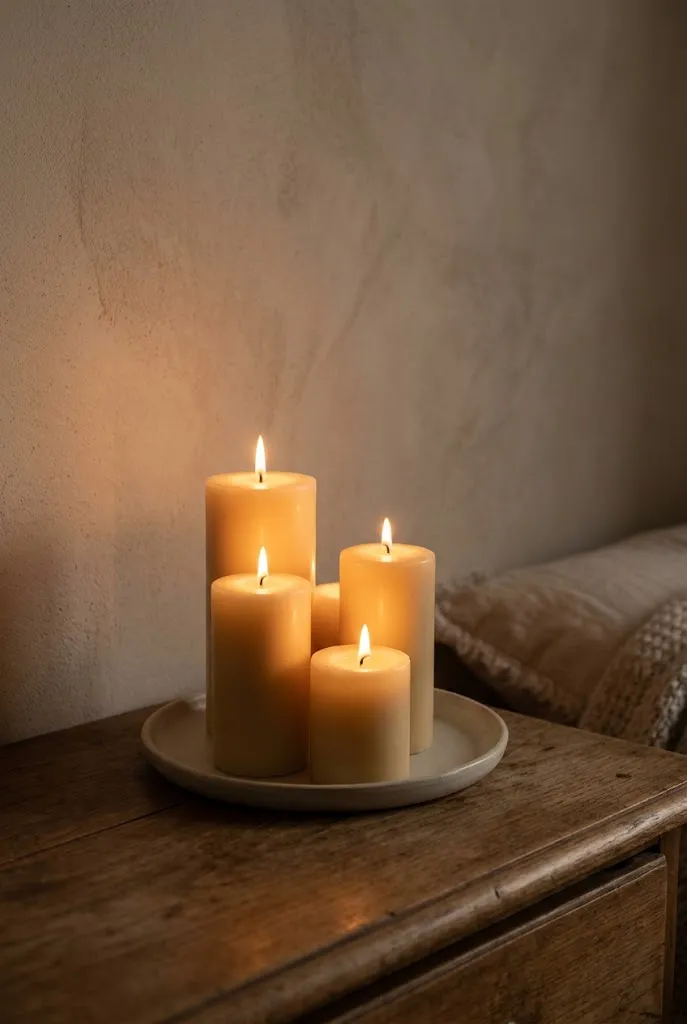
Beyond permanent fixtures, incorporating secondary layers of gentle illumination enhances the cocoon-like feeling of a winter sanctuary. Soft, flickering light creates shadows that give depth to neutral walls and textured fabrics.
- Group pillar candles of varying heights on a rustic wooden tray on a dresser or mantel.
- Use unscented or lightly scented natural beeswax candles to avoid overpowering the sleeping space with heavy artificial fragrances.
- Ensure open flames are placed safely away from drapes, bedding, and high-traffic pathways.
11. Incorporate Vintage or Antique Accent Pieces

A winter bedroom should feel collected over time rather than styled straight from a showroom floor. Introducing a vintage wooden stool, an antique brass mirror, or a weathered bench adds soul and historic character that counteracts the sterility of brand-new furnishings.
- Place a weathered wooden milking stool beside the bed to serve as an informal nightstand.
- Hang an antique mirror with a softly tarnished patina to bounce soft morning light across the room.
- Mix older wooden patinas with fresh, clean textiles to maintain a balanced, modern-traditional aesthetic.